2024
New Zealand Conservation
Across New Zealand, conservation efforts to preserve the unique landscape take place, with education and tourism at the center.
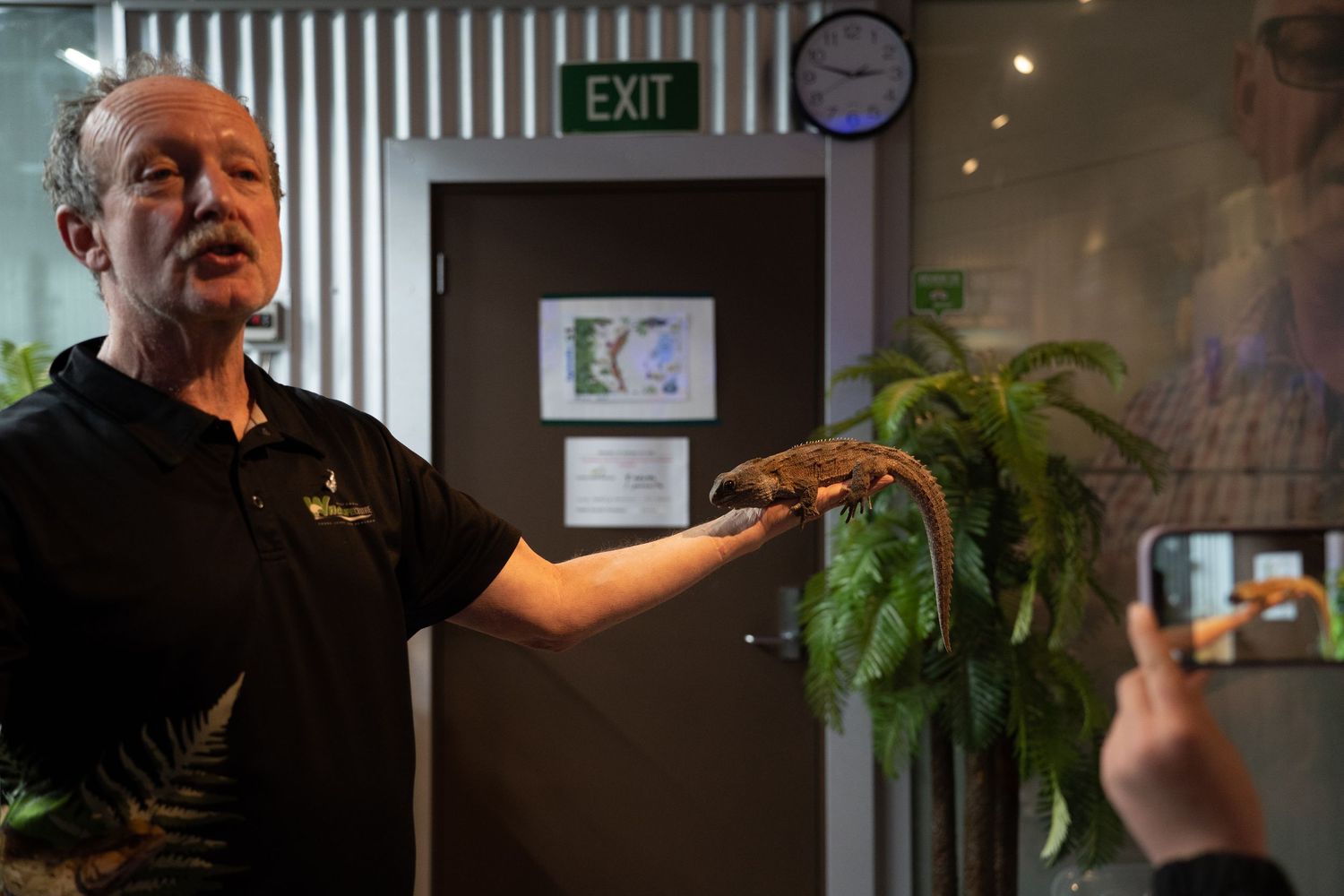
Stephen Surtees
Franz Josef, NZ
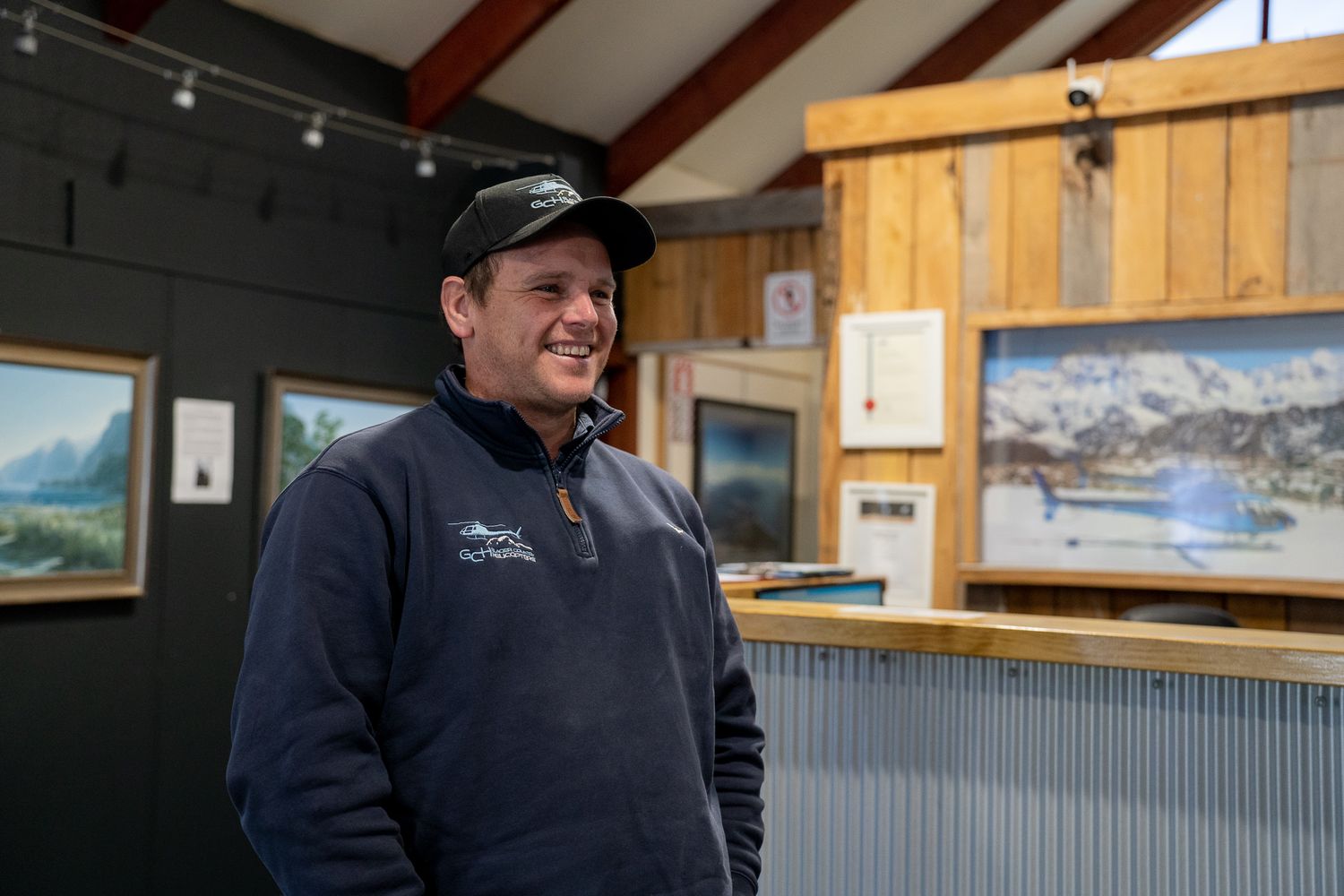
Mark Lash
Franz Josef, NZ
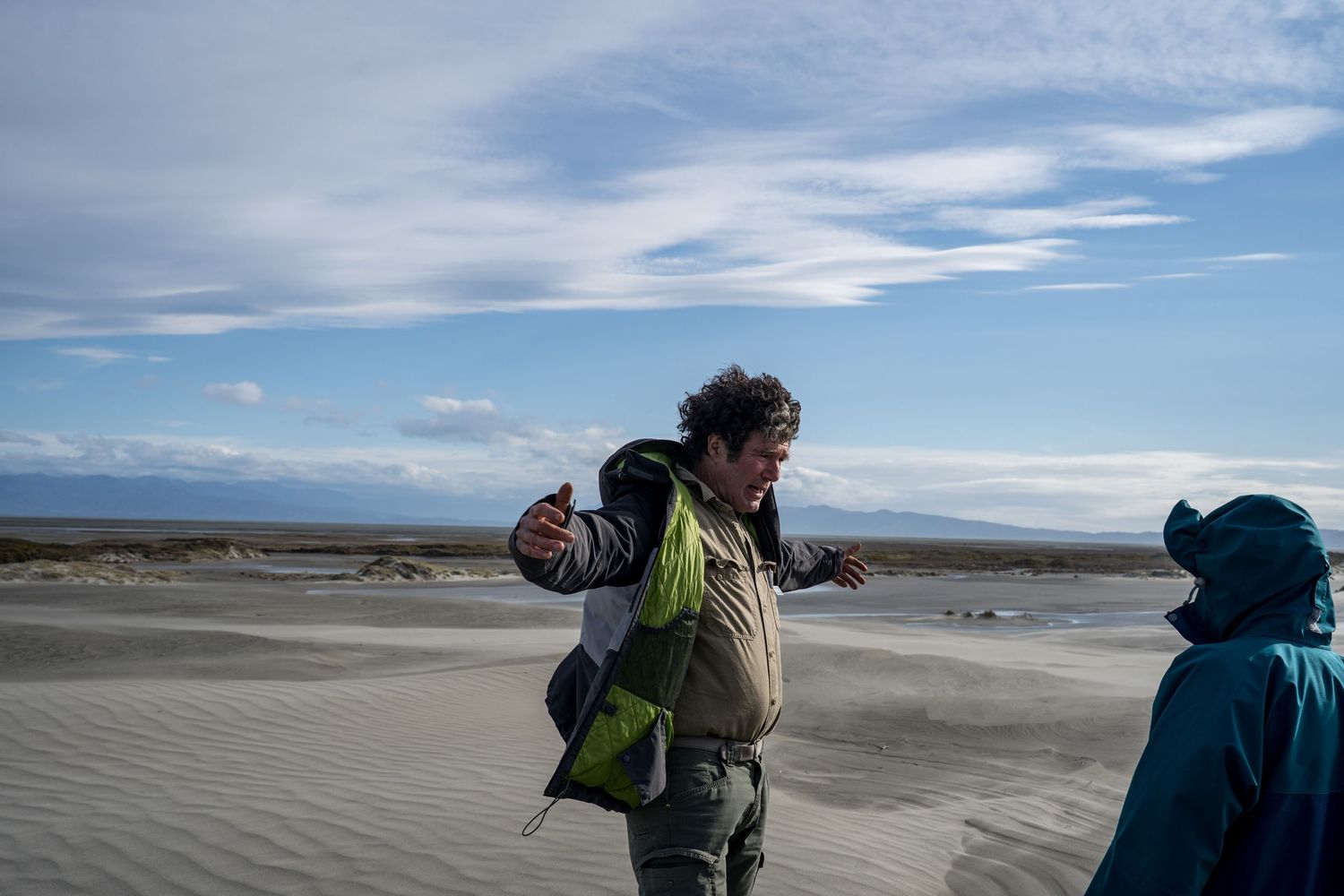
Alan Marsh
Golden Bay, NZ
Balancing the cost of tourism with conservation
New Zealand has some of the most unique biodiversity in the world
New Zealand is known around the world for its wild landscapes and unique ecosystems. With approximately 3.51 million overseas visitors between 2024-25 to the country, the effort to balance the economic incentive for tourism with the need to protect the environment, has become a balancing act. With initiatives like Predator Free By 2050, designed to protect an eco-system that developed without predators, with roughly 94% of reptiles and nearly three-quarters of terrestrial birds designated "at risk", tourism and conservation have become linked.
The department of Conservation (DOC) was asaked, by the New Zealand government to cut approxamately 6.5% of funding elegible for the 2024-25 year. Funding cuts are expected to cut 84 jobs in 2026.
Please note that the individuals named in this article are those who were available to give tours and/or be interviewed during the brief time I was in the area. As such, all subjects happen to be men. However, of the proposed employee cuts, 90% of the roles are filled by women.
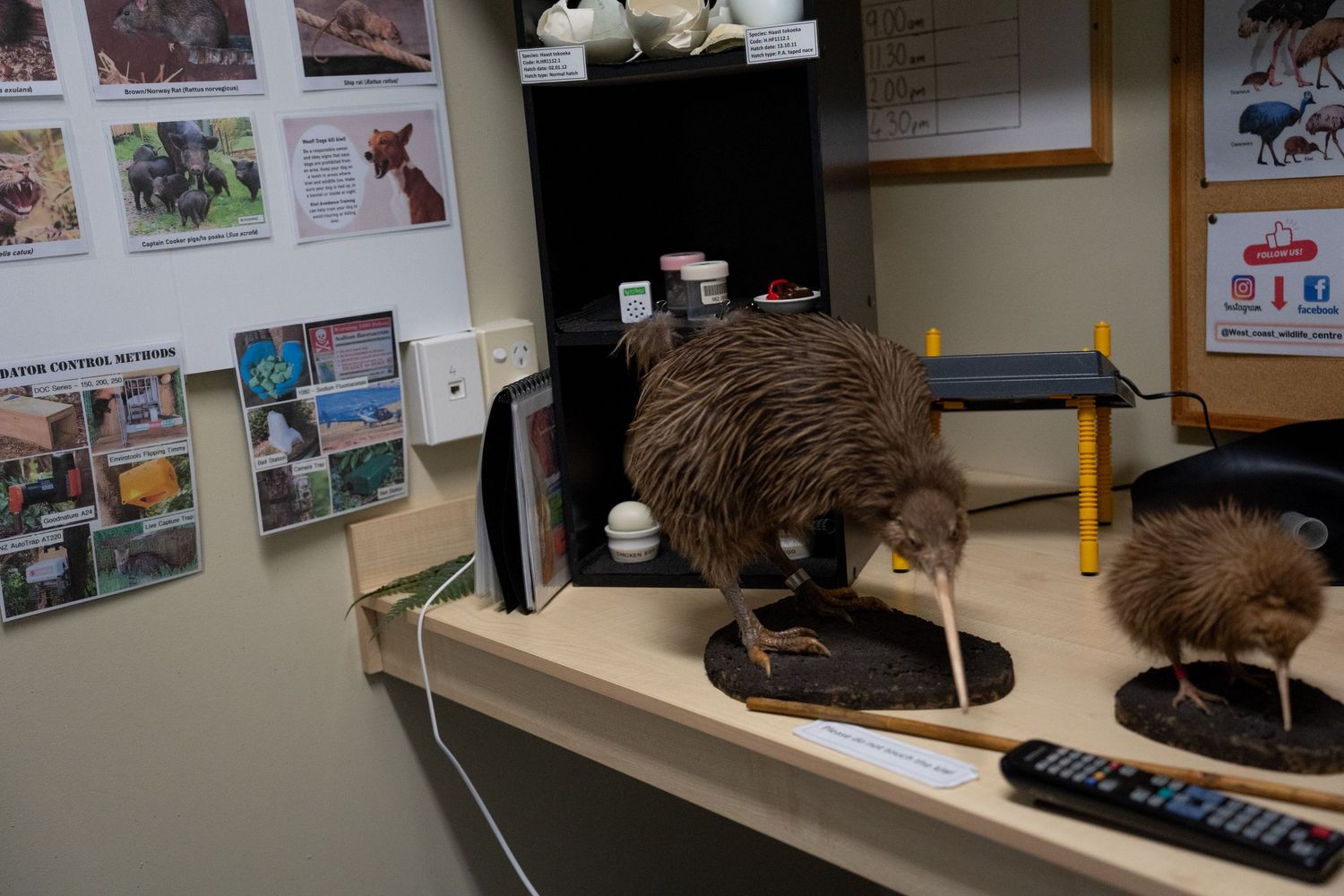
West coast wilderness center
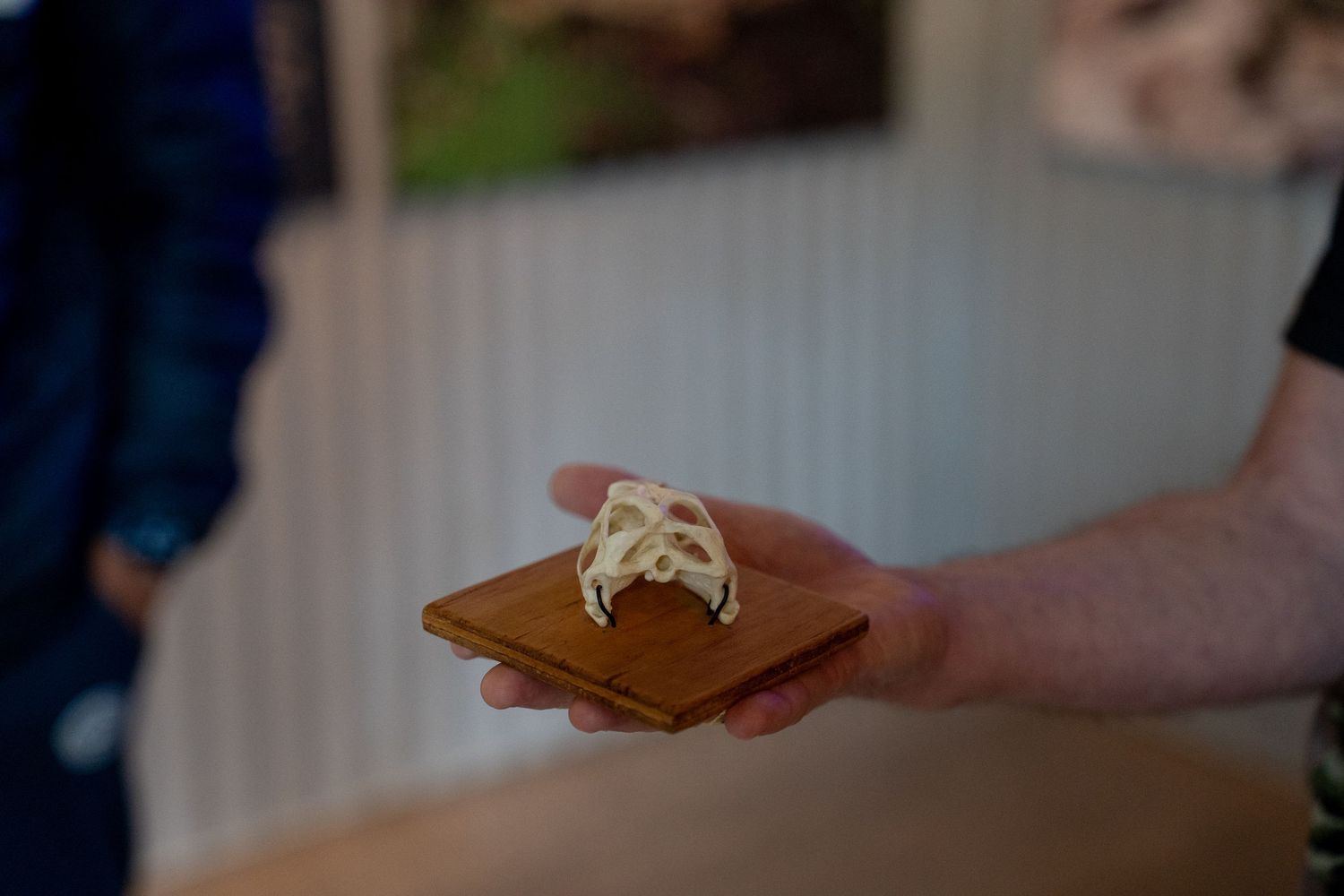
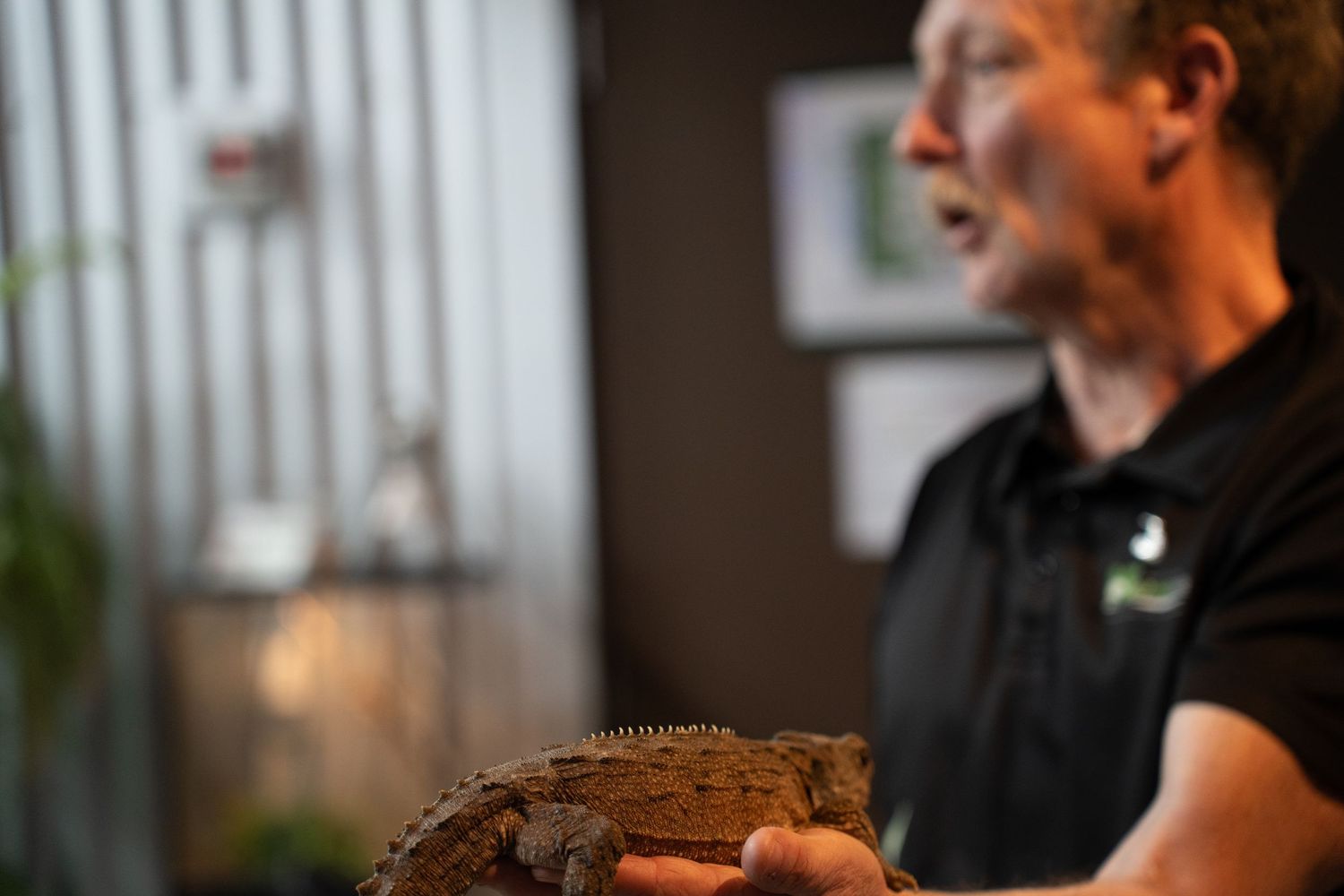
The West Coast Wildlife Center is one of a few attractions in the small town center of Franz Josef. Known for the Tuatara and Kiwi exhibits and hatching program. The Wildlife Center is one of the various programs around the country that DOC sends Kiwi eggs to every Spring. Thousands of tourists make their way to the Center to see the hatchlings on days when the weather is too bad to take the helicopters up to the to the main tourists attraction in the area, the Frans Josef glacier.
Steven Surtees is a Ranger at the Wildlife Center. He is an electrician by trade, but still works part-time at the wildlife center. "I installed a few lights in the kiwi exhibit," he said. The only lights in the exhibit are dim and red as to not disturb the nocturnal, flightless, birds. There were two North Island Brown Kiwi behind a half wall of glass, a bit taller than waist height. The UV lights that keep the foliage, mimicking the habitat of the kiwis, were installed by Mr. Surtees. One of the year's hatchlings is named Sammy, after the Surtees' late partner Samantha. "They offered me a full-time job, but I turned it down because it's a bit much as a job. For me, this is a hobby," he said. After falling in love with the wild West Coast region during a 6-month biking trip up the coast of the South Island, Franz Josef has become a quite place to to call home for Surtees.
Conservation efforts across the country increasingly rely on Rangers and partner organizations like Surtees and the Wildlife Center to help fill the gaps as government resources reach their limits. "The Department of Conservation has a lot to do, but is cutting back on jobs, which is a pain, but they are also cutting back on funding, which is even harder. This place is owned privately, but we depend on the Department of Conservation to determine how many eggs we get and how many chicks we can have on display and for how long."
Most people come to the area to see the glacier and the wildlife center benefits from the traffic, but also gives people a place to go when the weather is too bad to take a helicopter up to get a closer look at the glacier. When funding relies on tourism, it can become a feast-or-famine situation."I think generally in the winter [the Center is] lucky to do $2,000 a day, but during the summer we can do up to $30,000."
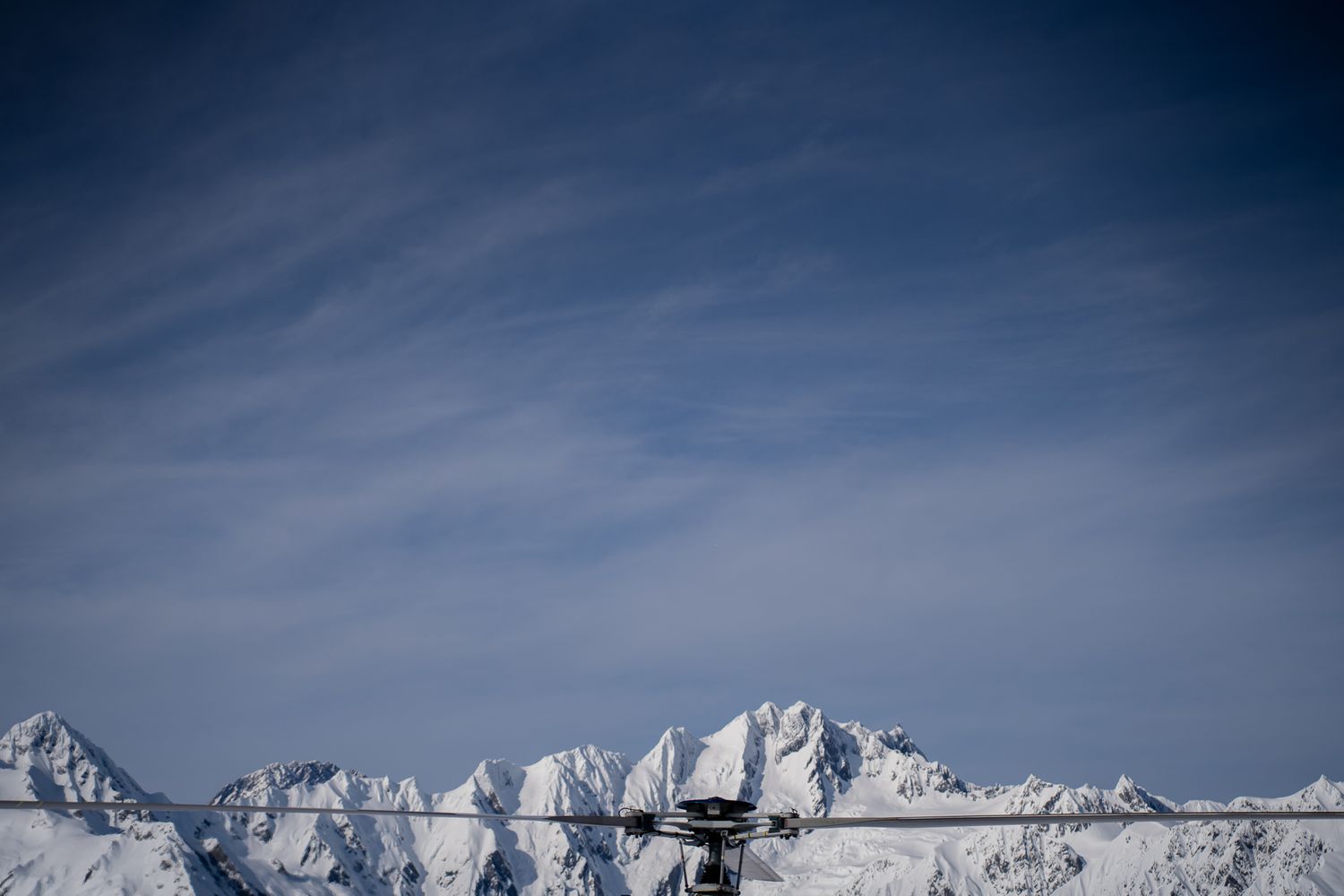
Glacier Country Helicopters
a small company doing its best to leave a big impression
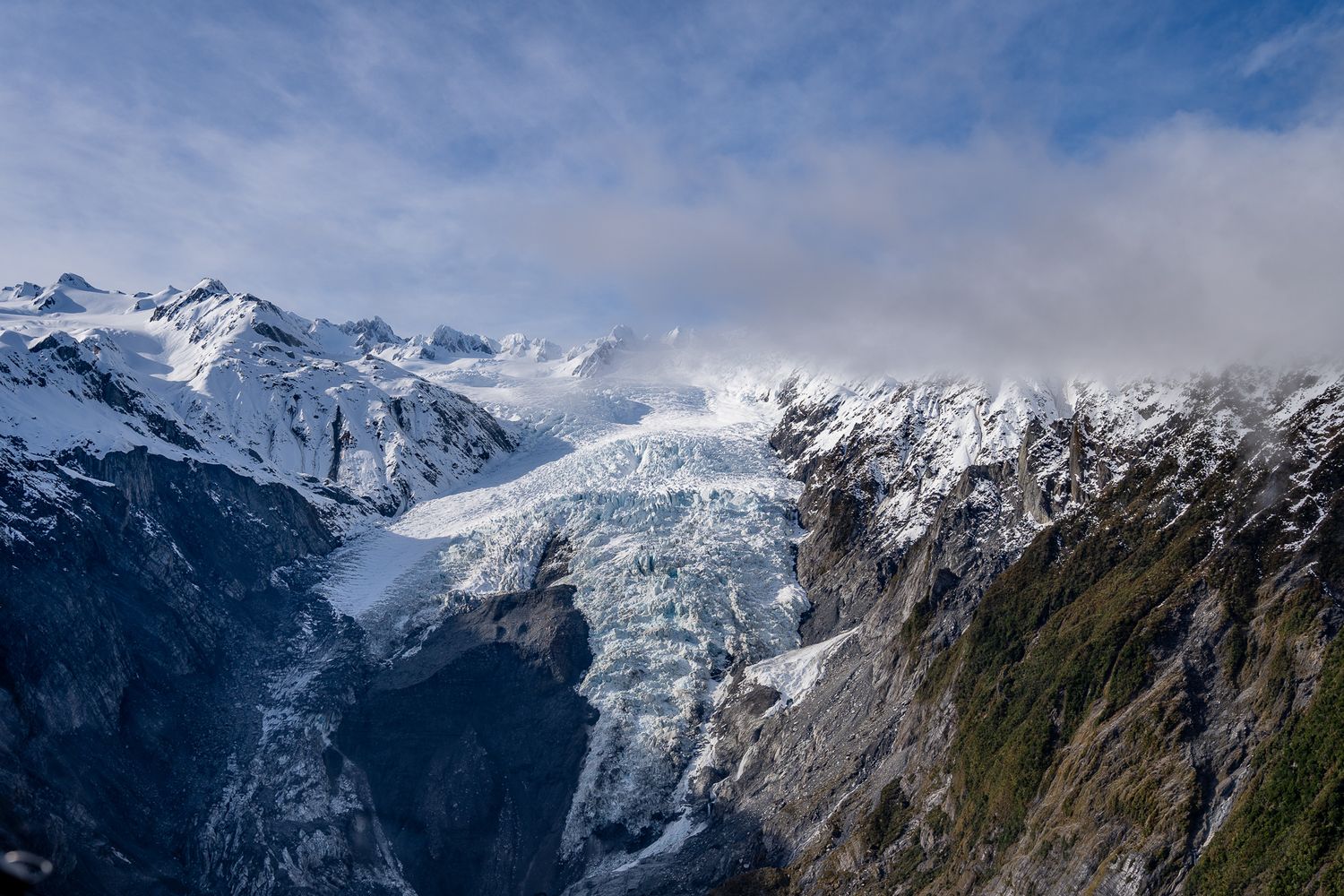
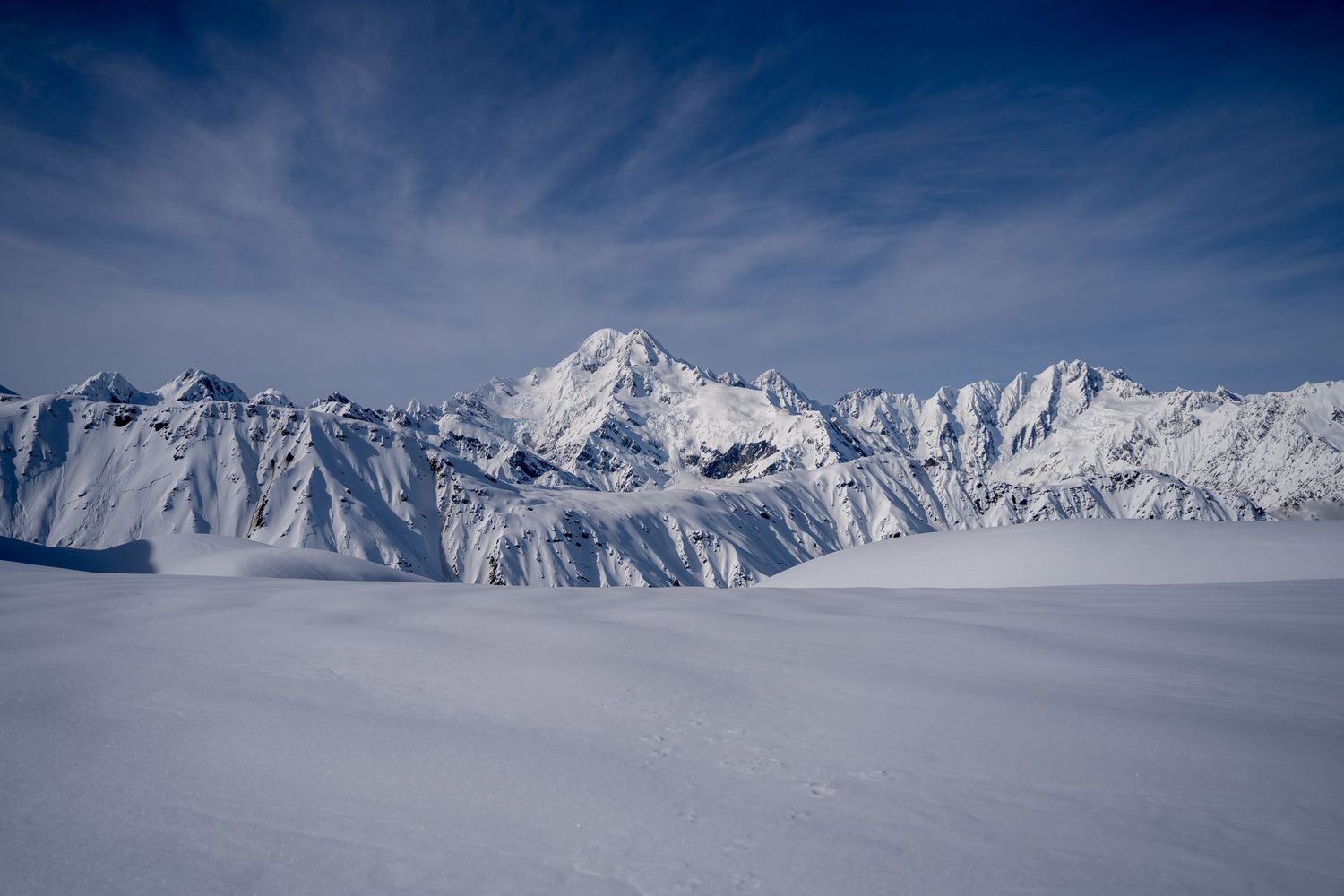
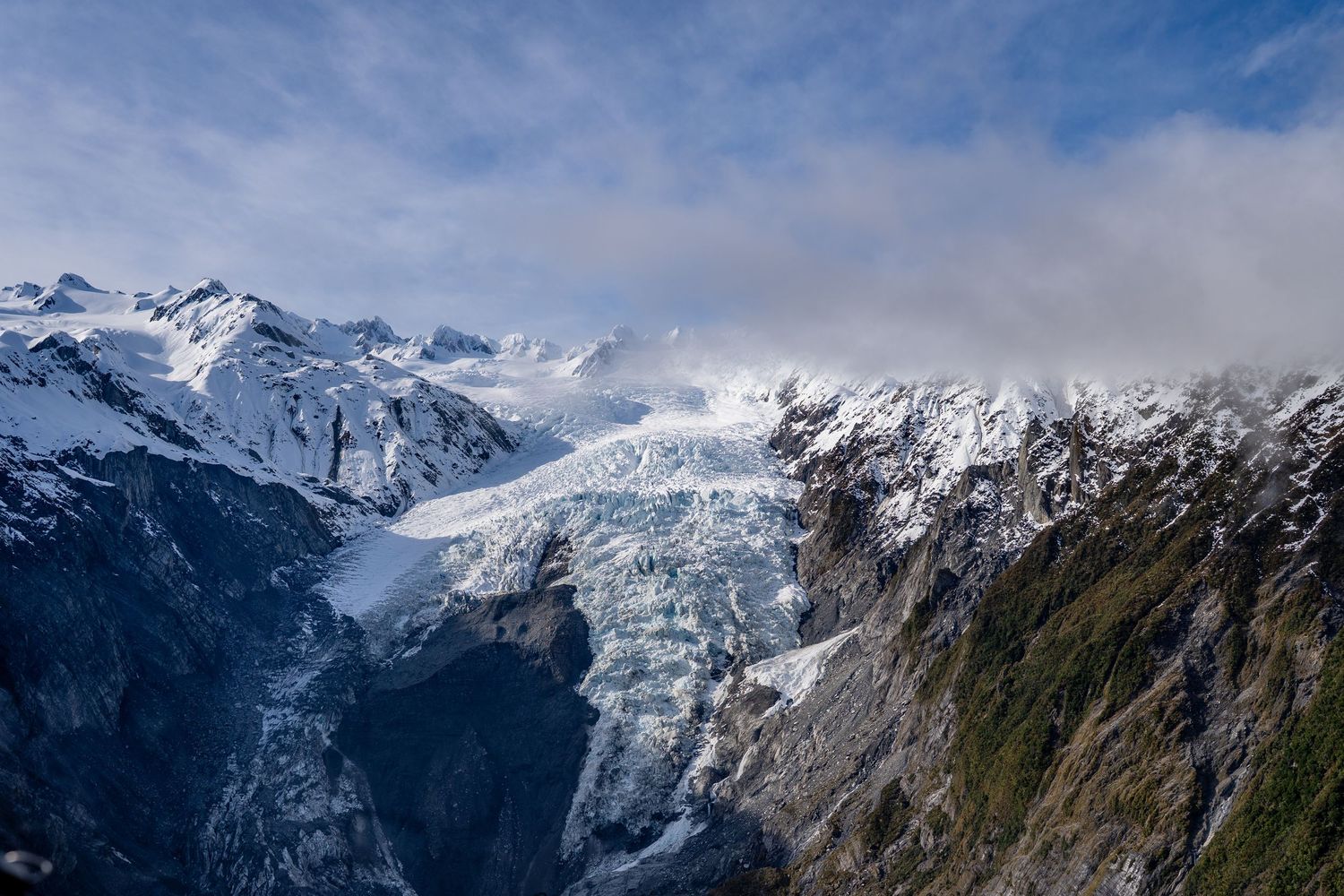
In Fanz Josef, New Zealand, the main attraction is the helicopter rides up to Mt. Cook (the tallest Mt. in New Zealand) and the Franz Josef Glacier . One of around 3,000 glaciers in New Zealand, and like most them, it is only accessible by helicopter after shrinking by approximately 35% between 1978 and 2020.
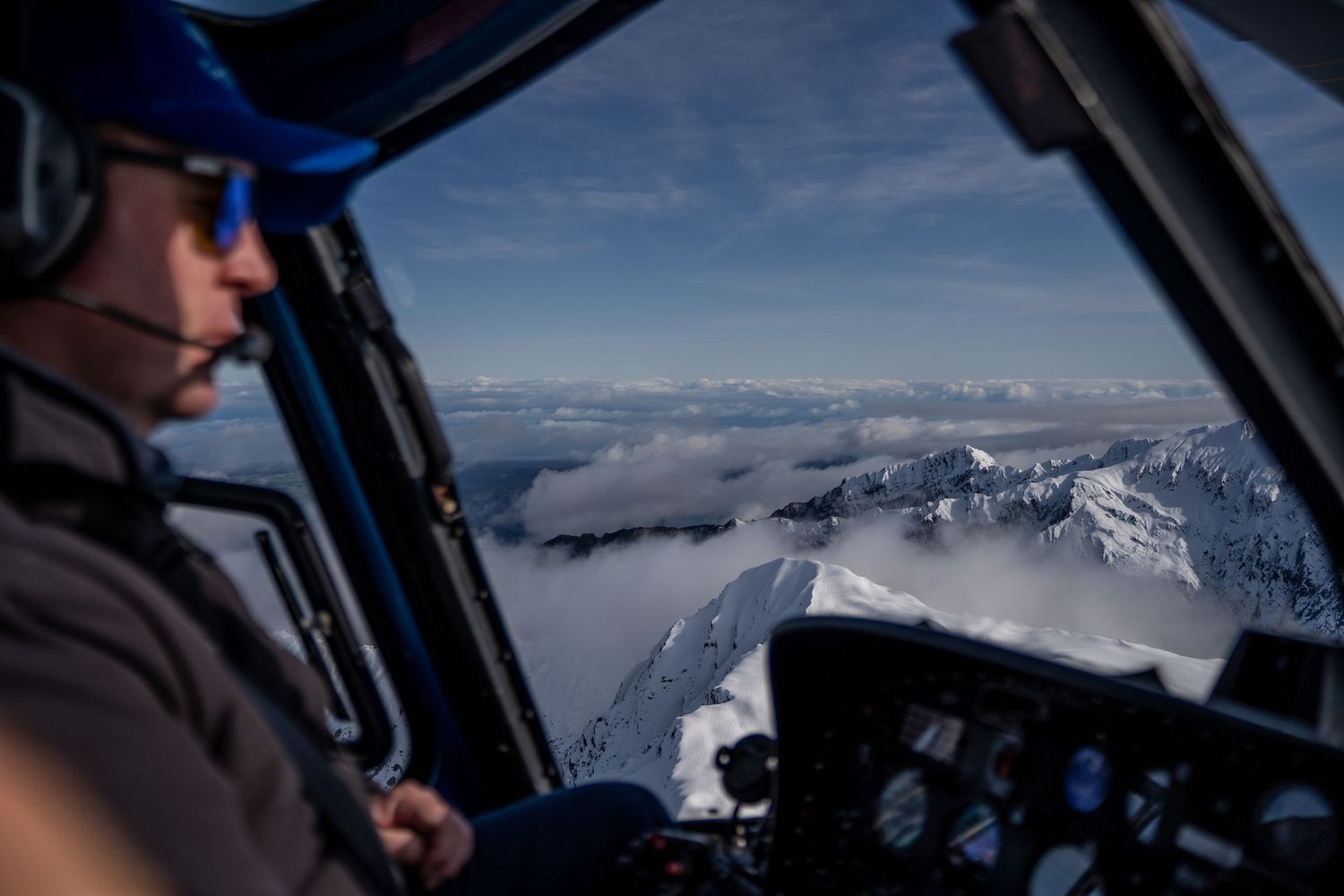
Glacier Country Helicopters is a small, family owned company that charters flights up to the glacier as one of the four helicopter tour companies in the Franz Josef. With a team of five pilots, Glacier Country is the smallest teams flying in Franz Josef.
Glacier Tours
Mark Lash has been flying since 2009 and has been working at Glacier Country Helicopters for 2.5 years at the time of this interview. "I grew up here so this is home," he said. "The population has decreased. when I was younger there was a sawmill that employed a lot of people. There was tourism but not like we have it now." Population shifts due to the economy as well as
the shifting climate has changed the landscape of the West Coast region over the past few decades. "When we would take school trips as a kid the glacier was much bigger, you could walk up and touch it." But even with such drastic changes, the glacier still sits at 12 kilometers long 1,000 ft above sea level at the base and the top about 9,500 ft towards the top. "If you look at the characteristics over the last 100 years, its gone down and its grown back." glaciers are not static geographical features. They grow or shrink based on snowfall and snowmelt.
What they look like in the future will depend on the global climate.
"A lot of our weather comes up from Antarctica or off of Australia." When asked how long he thinks it will take for the changes in weather to impact flying as the changes become more permanent he said ,"It probably already impacts it." The current height of tourist season in New Zealand is October through March and April. However with the rain lasting longer, Lash predicts that it might not be long before tourists start pushing their trips back to November with the season ending in May or June.
Farewell spit Eco Touts
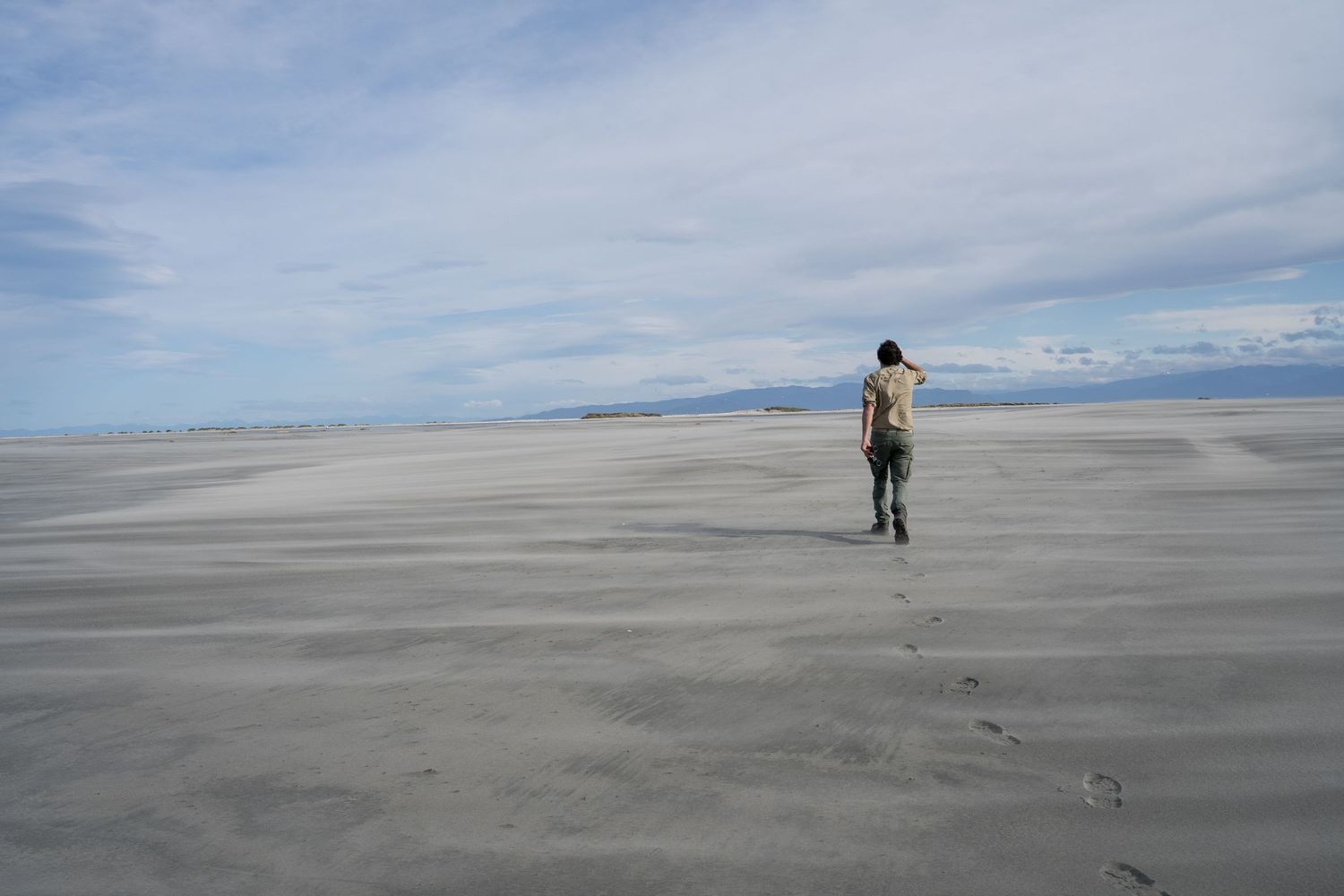
The northernmost point of New Zealand's South Island. 30 kilometers long and growing every year.
Farewell spit eco tours
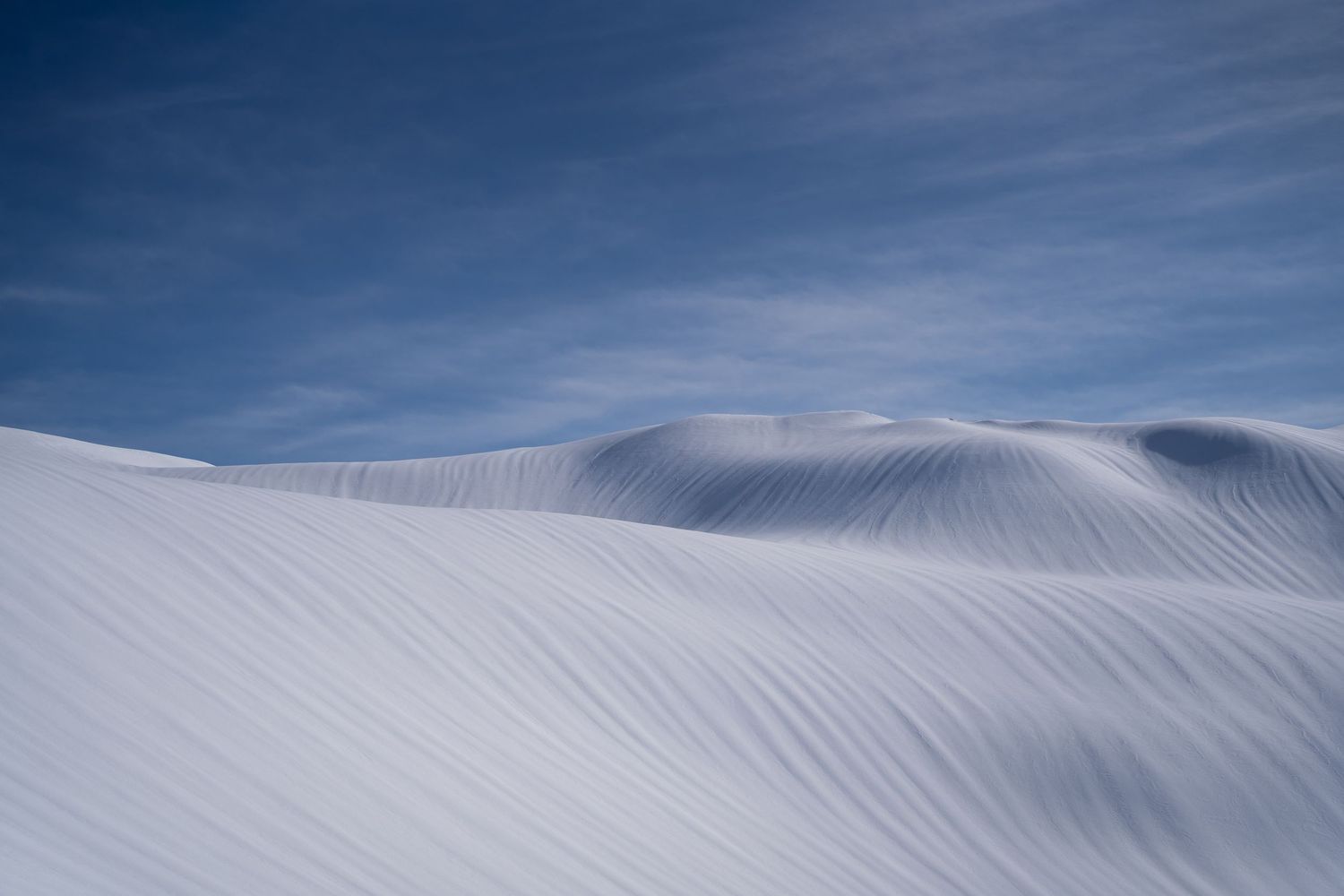
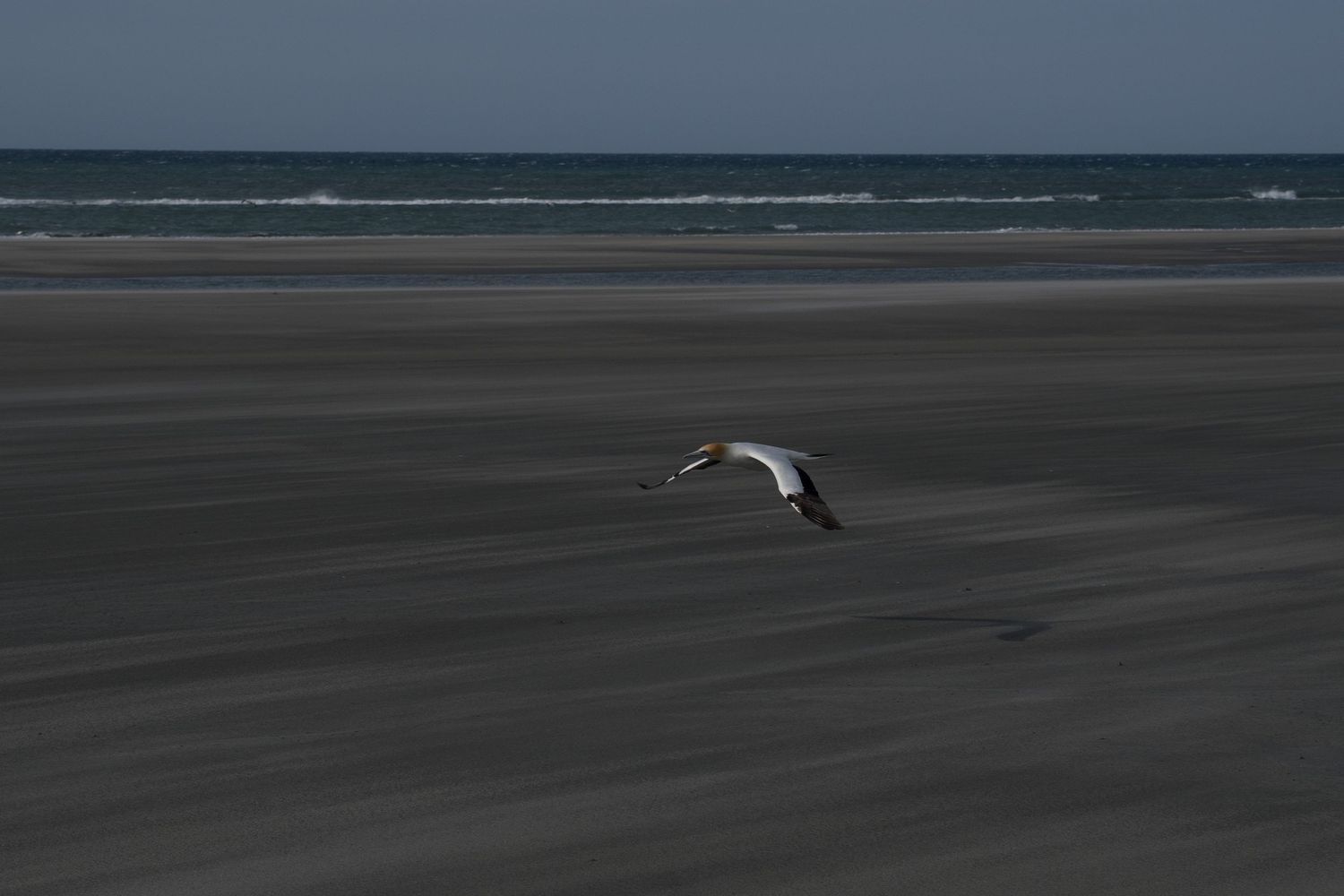
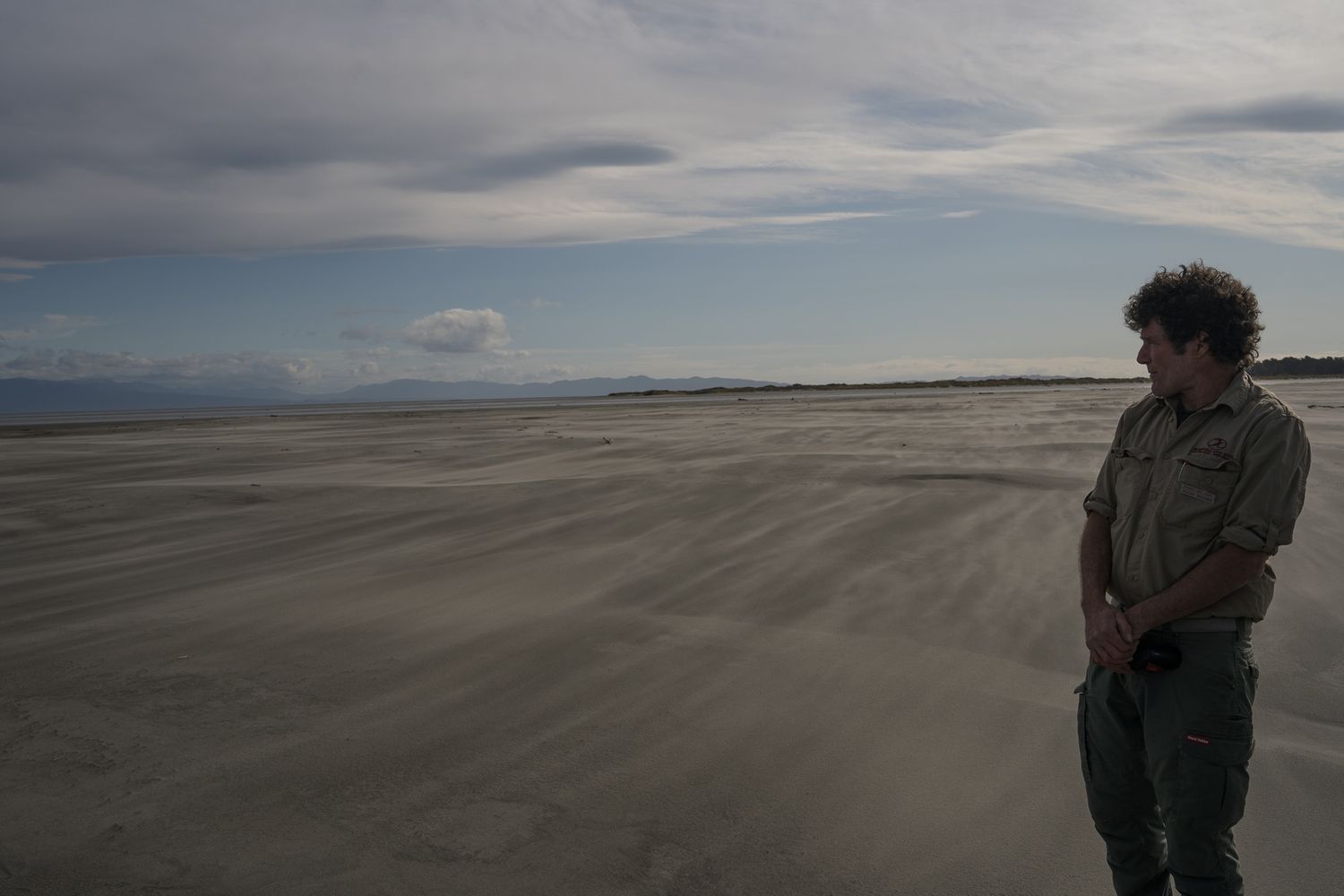
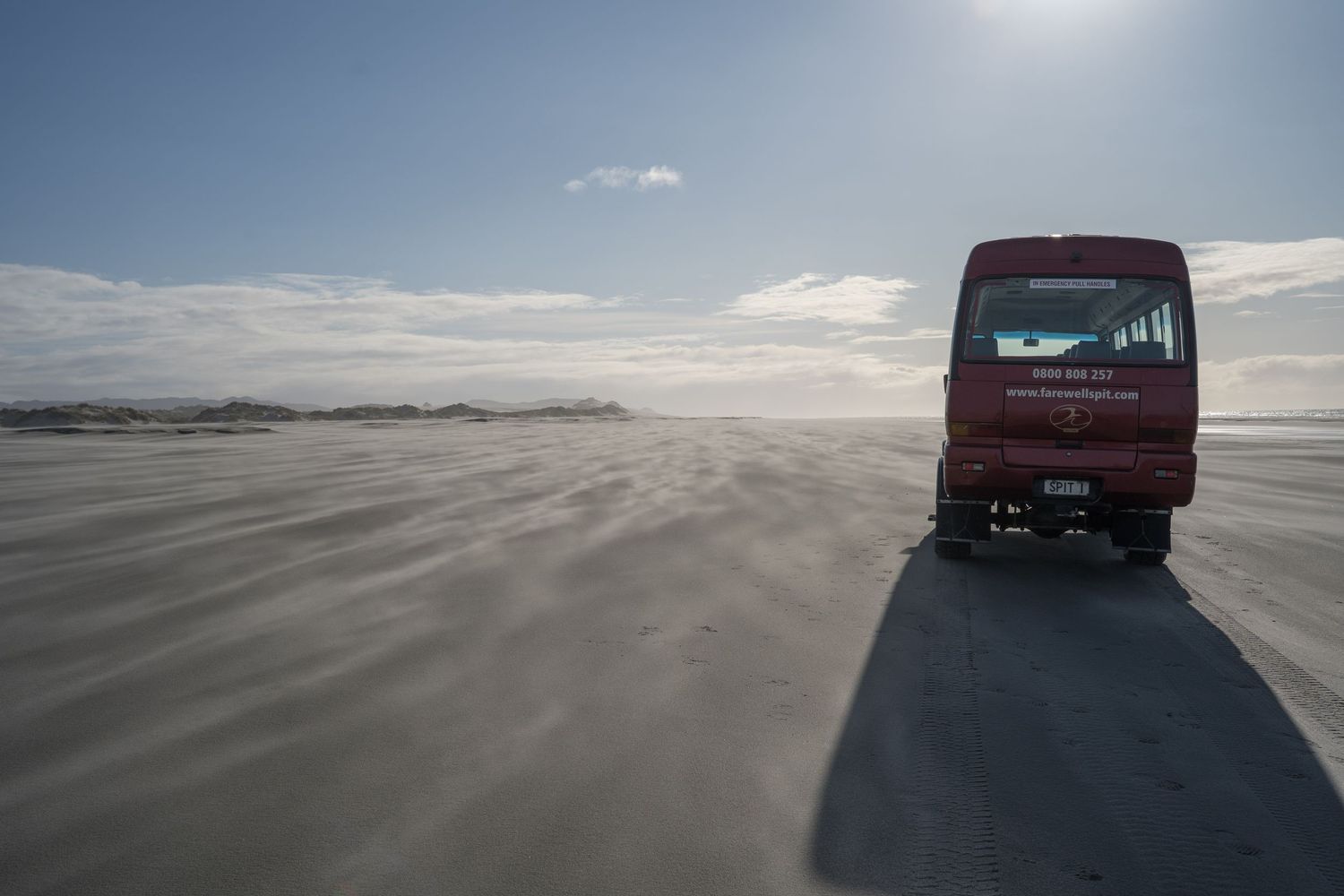
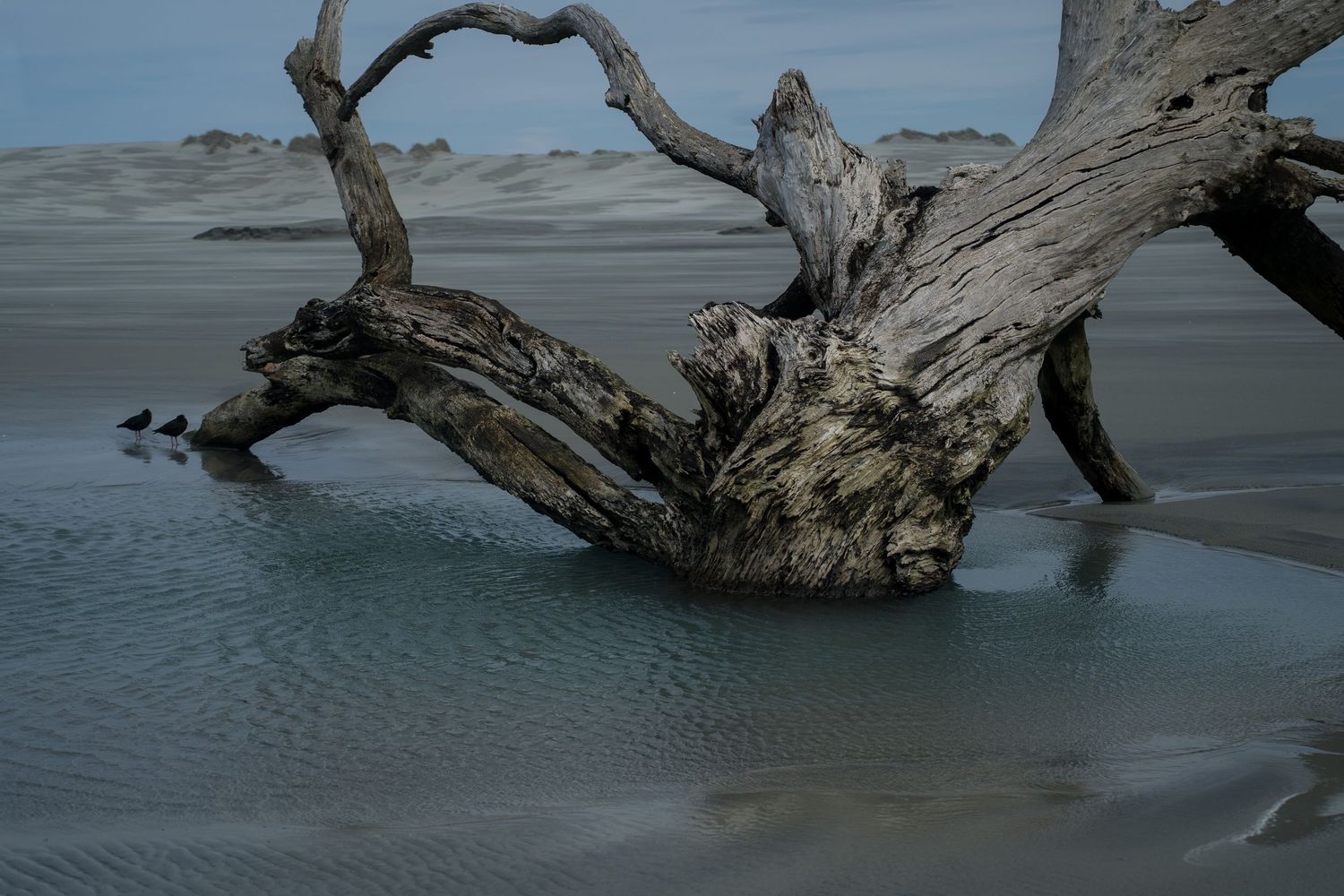
As founding members of the Nelson Sustainable Tourism Charter, the Farewell Spit Eco Tours are dedicated to maintaining the unique ecosystem of the northernmost point of New Zealand's South Island. Eco Tours partners with the Department of Conservation to trap rats, stoats, and possums; monitor other pest-eradication efforts; and track the Gannet colony and other migrating birds. As a Ramsar Wetland of international importance and a protected nature reserve, only 4 kl of the 30 kl sand spit is accessible to the public. The tour company is the only way for tourists to experience the full force of the spit. As the landmass juts into the Tasman Sea, wind gusts can reach up to 29 MPH, kicking up the sand that collects as the mountains, like Mt. Cook, that make up New Zealand Southern Alps are eroded and the winds carry the sand North, causing the landmass to grow 3 meters per year.
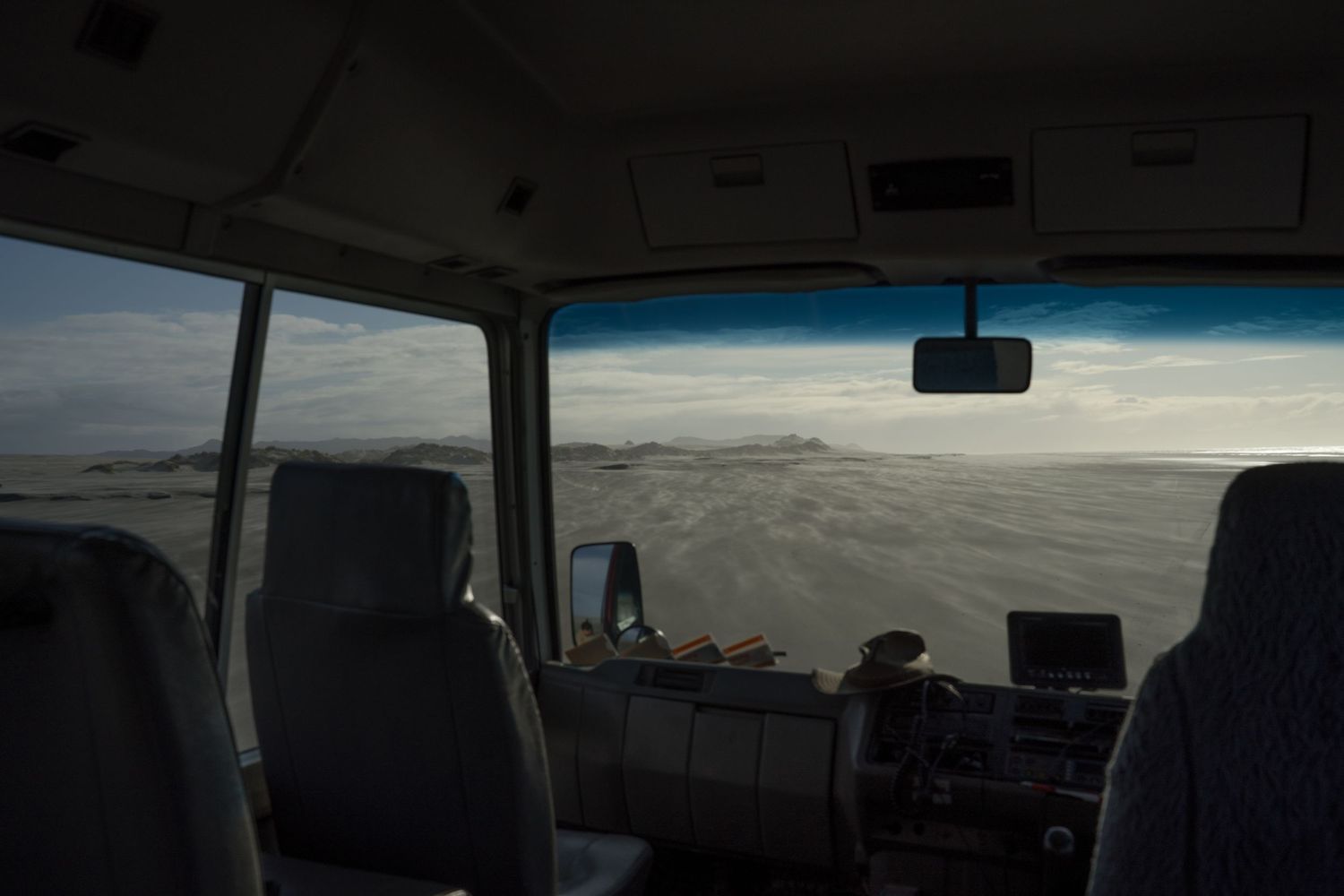
The highlights of the tour include Cape Farewell and the most remote lighthouse in the country. Though unable to interview Alan Marsh, the tour guide for my trip out to the spit, he explained during the tour that the tours began as tourists paying for a seat on the truck that delivered the mail to the lighthouse families. As the technology of lighthouses required fewer and fewer manual operations, the lighthouse families moved away, leaving the management of the land to DOC. Farewell Spit Eco Tours is one of the only organization that has legal permission to be out on the spit, their work to maintain the spit acts as an extension of DOC’s efforts to protect region. Marsh and the Eco Tours company, much like Surtees and the Wildlife Center in Fanz Josef, fill a growing gap in the country’s efforts to preserve their environment.
Cited
https://www.doc.govt.nz/news/issues/budget-2024-overview/
https://www.rnz.co.nz/news/national/562316/department-of-conservation-proposes-cutting-84-jobs-primarily-affecting-women
https://www.wetlandtrust.org.nz/get-involved/ramsar-wetlands/farewell-spit/
https://science.nasa.gov/earth/earth-observatory/farewell-spit-new-zealand-5754/
https://www.doc.govt.nz/nature/native-animals/birds/birds-a-z/kiwi/brown-kiwi/
https://www.doc.govt.nz/nature/native-animals/reptiles-and-frogs/tuatara/
https://environment.govt.nz/assets/publications/Climate-Change-Projections-Guidance-FINAL.pdf
https://www.farewellspit.com/about-us/
https://glaciercountryhelicopters.co.nz/
https://westcoast.co.nz/visit/operators/west-coast-wildlife-centre-franz-josef/